
Default
What Makes an AC Controller Panel Essential for Automation Systems?
Documento · Archivo MR
In modern automation systems, the ac controller panel, as the core hub of environmental control, its data acquisition and real-time response capabilities are of crucial importance. Studies show that the intelligent ac controller panel can process more than 2,000 data points per second, including parameters such as temperature, humidity, air pressure and air quality, with a control accuracy as high as ±0.3℃. The automated temperature control system deployed at Amazon's logistics center shows that by monitoring the heat load changes in the package storage area in real time, the system can adjust the cooling output within 500 milliseconds, increasing energy usage efficiency by 22% and reducing annual electricity bills by $180,000.
System integration capability is a key indicator for measuring the automation value of ac controller panel. The Industry 4.0 standard requires that the controller support at least five communication protocols such as OPC UA and MQTT to achieve seamless integration with BMS and ERP systems. The practical case of the Toyota motor factory shows that the ac controller panel integrated with the MES system can pre-adjust the workshop environment 30 minutes in advance according to the production schedule, reducing the temperature fluctuation range from ±2.5℃ to ±0.7℃. At the same time, it synchronizes the ventilation system with the production line rhythm, reducing the ineffective operation time by 46%.
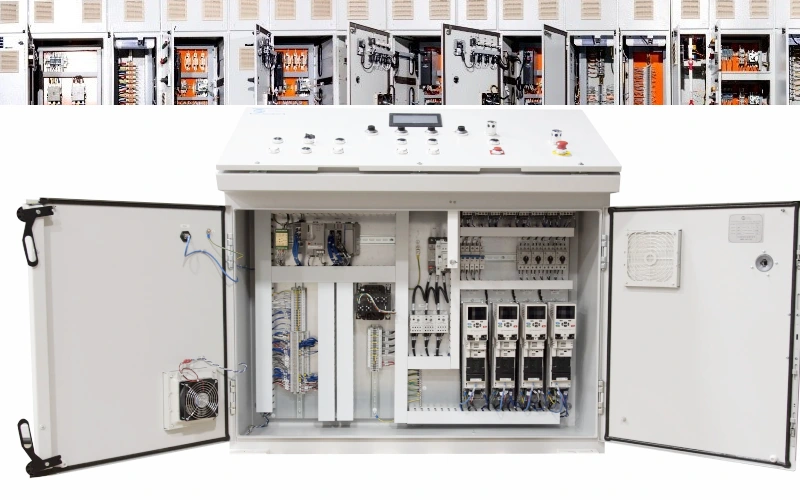 In terms of energy efficiency optimization, intelligent algorithms enable the ac controller panel to have deep learning capabilities. By analyzing the historical operation data of 365 days, the system can establish a load forecasting model with an accuracy rate of 92%. After adopting the AI-driven ac controller panel in a certain data center in Beijing, the PUE value of the cooling system was optimized from 1.78 to 1.41, saving 2.4 million kilowatt-hours of cooling electricity annually. This system can also calculate the sensible heat ratio (SHR) in real time, dynamically adjust the dehumidification intensity, avoid energy waste caused by excessive dehumidification, and keep the humidity control accuracy within ±3%RH.
The Fault Prediction and Health Management (PHM) function significantly enhances system reliability. The high-end ac controller panel can warn of compressor abnormalities 140 hours in advance through vibration sensors and current analysis, with an accuracy rate of over 85%. The air conditioning system upgrade case of Dubai International Airport shows that the controller adopting PHM technology has reduced the sudden failure rate by 67%, shortened the maintenance response time to 15 minutes, and extended the equipment life by 3.8 years. These functions keep the system availability at 99.98%, far exceeding the industry average of 92% for traditional control systems.
According to the 2023 technical report of the U.S. Department of Energy, an ac controller panel with adaptive optimization capabilities can increase the overall energy efficiency of building automation systems by 35% to 40%. The implementation data of a global data center network of a certain multinational enterprise shows that through cross-regional collaborative control strategies, the total cooling power consumption during peak load periods has decreased by 31%, equivalent to a reduction of 1,800 tons of carbon emissions annually. These controllers update the algorithm model through the cloud every six months, continuously optimizing control parameters to keep the system always operating within the most efficient range.
In terms of energy efficiency optimization, intelligent algorithms enable the ac controller panel to have deep learning capabilities. By analyzing the historical operation data of 365 days, the system can establish a load forecasting model with an accuracy rate of 92%. After adopting the AI-driven ac controller panel in a certain data center in Beijing, the PUE value of the cooling system was optimized from 1.78 to 1.41, saving 2.4 million kilowatt-hours of cooling electricity annually. This system can also calculate the sensible heat ratio (SHR) in real time, dynamically adjust the dehumidification intensity, avoid energy waste caused by excessive dehumidification, and keep the humidity control accuracy within ±3%RH.
The Fault Prediction and Health Management (PHM) function significantly enhances system reliability. The high-end ac controller panel can warn of compressor abnormalities 140 hours in advance through vibration sensors and current analysis, with an accuracy rate of over 85%. The air conditioning system upgrade case of Dubai International Airport shows that the controller adopting PHM technology has reduced the sudden failure rate by 67%, shortened the maintenance response time to 15 minutes, and extended the equipment life by 3.8 years. These functions keep the system availability at 99.98%, far exceeding the industry average of 92% for traditional control systems.
According to the 2023 technical report of the U.S. Department of Energy, an ac controller panel with adaptive optimization capabilities can increase the overall energy efficiency of building automation systems by 35% to 40%. The implementation data of a global data center network of a certain multinational enterprise shows that through cross-regional collaborative control strategies, the total cooling power consumption during peak load periods has decreased by 31%, equivalent to a reduction of 1,800 tons of carbon emissions annually. These controllers update the algorithm model through the cloud every six months, continuously optimizing control parameters to keep the system always operating within the most efficient range.
In terms of energy efficiency optimization, intelligent algorithms enable the ac controller panel to have deep learning capabilities. By analyzing the historical operation data of 365 days, the system can establish a load forecasting model with an accuracy rate of 92%. After adopting the AI-driven ac controller panel in a certain data center in Beijing, the PUE value of the cooling system was optimized from 1.78 to 1.41, saving 2.4 million kilowatt-hours of cooling electricity annually. This system can also calculate the sensible heat ratio (SHR) in real time, dynamically adjust the dehumidification intensity, avoid energy waste caused by excessive dehumidification, and keep the humidity control accuracy within ±3%RH.
The Fault Prediction and Health Management (PHM) function significantly enhances system reliability. The high-end ac controller panel can warn of compressor abnormalities 140 hours in advance through vibration sensors and current analysis, with an accuracy rate of over 85%. The air conditioning system upgrade case of Dubai International Airport shows that the controller adopting PHM technology has reduced the sudden failure rate by 67%, shortened the maintenance response time to 15 minutes, and extended the equipment life by 3.8 years. These functions keep the system availability at 99.98%, far exceeding the industry average of 92% for traditional control systems.
According to the 2023 technical report of the U.S. Department of Energy, an ac controller panel with adaptive optimization capabilities can increase the overall energy efficiency of building automation systems by 35% to 40%. The implementation data of a global data center network of a certain multinational enterprise shows that through cross-regional collaborative control strategies, the total cooling power consumption during peak load periods has decreased by 31%, equivalent to a reduction of 1,800 tons of carbon emissions annually. These controllers update the algorithm model through the cloud every six months, continuously optimizing control parameters to keep the system always operating within the most efficient range.
✦
Servicio de investigación
¿Busca documentación sobre un familiar represaliado?
Nuestro equipo de historiadores localiza expedientes en archivos públicos y privados en un tiempo medio de 9 días laborables. Primera consulta sin compromiso.
Solicita tu investigación gratuita