
Default
Why is the steel block so important in mold making?
Documento · Archivo MR
In the field of mold manufacturing, the significance of steel blocks is first reflected in their irreplaceable dimensional stability and thermal properties. A P20 pre-hardened steel block that has undergone standardized quenching and tempering has a hardness stable within the range of 30-36 HRC. When the injection mold is subjected to an injection pressure of 60-80 megapascals and a periodic temperature fluctuation of 200 degrees Celsius, the coefficient of thermal expansion can be controlled within 1.2×10⁻⁵/ degree Celsius. Research shows that transparent product molds made of S136 stainless steel can maintain a surface roughness of Ra<0.1 microns after over one million injection cycles, extending the mold's lifespan by approximately 50% and saving 300,000 yuan in mold replacement costs annually compared to ordinary materials.
From an economic perspective, the repairability of steel blocks significantly reduces long-term operating costs. When a 0.1-millimeter deep pitting occurs in H13 hot work die steel due to wear, the alloy powder is deposited at a rate of 2 grams per minute through laser cladding technology. The repair cost only accounts for 20% of the purchase price of the new die, but the service life of the die can be restored to more than 90% of its original state. According to the 2023 production report of Volkswagen in Germany, the bumper mold made of modular steel blocks has shortened the mold modification cycle from 90 days to 15 days by partially replacing inserts, and the efficiency of new product research and development has increased by 400%.
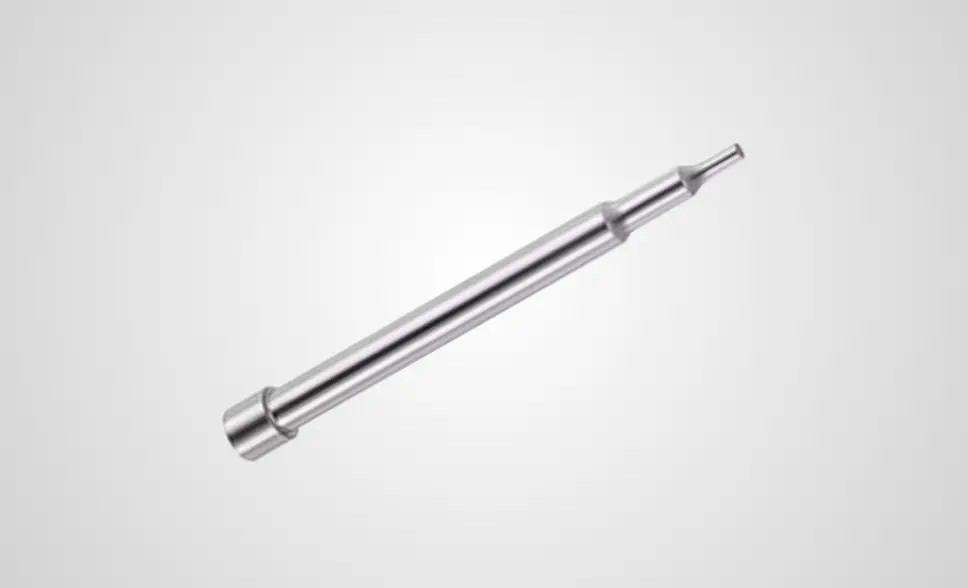 In terms of precision forming, NAK80 precipitation-hardened steel undergoes special heat treatment to achieve a hardness of 40-42 HRC, and is directly mirror-polished to Ra0.025 microns with an etching accuracy error of less than ±0.005 millimeters. The mold for car lampshades made of this material can form complex optical textures with a thickness of 0.5 millimeters and a tolerance zone of only 0.02 millimeters in one go, increasing the yield rate from 85% to 99.5%. Just like the gear system of a precision clock, the microscopic precision of each steel block assembly jointly determines the macroscopic quality of the final product.
In the face of high-intensity forming processes, such as the production of automotive body panels with 12 stamping times per minute under a 600-ton press, the impact toughness demonstrated by Cr12MoV cold work die steel is of crucial importance. Its compressive strength reaches 2500 megapascals, and its fatigue limit exceeds 10^7 cycles when subjected to periodic impact loads. The practical data of China FAW Mould Company shows that the service life of the door molds made of steel blocks with optimized composition has been increased from 300,000 strokes to 800,000 strokes, and the average annual benefit of a single set of molds has increased by 1.2 million yuan.
The material science innovation of steel blocks continues to drive the progress of the mold industry. The ASP-23 high-speed steel manufactured by powder metallurgy technology has its carbide particle size refined to 1-2 microns and the uniformity of distribution improved by 50%, reducing the synchronous deviation of runner wear in multi-cavity injection molds from ±5% to ±1%. This technology has increased the number of cavities in the mold for smartphone shells from 32 to 64, boosting production efficiency by 85%. At the same time, it has reduced the cost of producing one million products by 20%, demonstrating the multiplier effect of basic materials on high-end manufacturing.
In terms of precision forming, NAK80 precipitation-hardened steel undergoes special heat treatment to achieve a hardness of 40-42 HRC, and is directly mirror-polished to Ra0.025 microns with an etching accuracy error of less than ±0.005 millimeters. The mold for car lampshades made of this material can form complex optical textures with a thickness of 0.5 millimeters and a tolerance zone of only 0.02 millimeters in one go, increasing the yield rate from 85% to 99.5%. Just like the gear system of a precision clock, the microscopic precision of each steel block assembly jointly determines the macroscopic quality of the final product.
In the face of high-intensity forming processes, such as the production of automotive body panels with 12 stamping times per minute under a 600-ton press, the impact toughness demonstrated by Cr12MoV cold work die steel is of crucial importance. Its compressive strength reaches 2500 megapascals, and its fatigue limit exceeds 10^7 cycles when subjected to periodic impact loads. The practical data of China FAW Mould Company shows that the service life of the door molds made of steel blocks with optimized composition has been increased from 300,000 strokes to 800,000 strokes, and the average annual benefit of a single set of molds has increased by 1.2 million yuan.
The material science innovation of steel blocks continues to drive the progress of the mold industry. The ASP-23 high-speed steel manufactured by powder metallurgy technology has its carbide particle size refined to 1-2 microns and the uniformity of distribution improved by 50%, reducing the synchronous deviation of runner wear in multi-cavity injection molds from ±5% to ±1%. This technology has increased the number of cavities in the mold for smartphone shells from 32 to 64, boosting production efficiency by 85%. At the same time, it has reduced the cost of producing one million products by 20%, demonstrating the multiplier effect of basic materials on high-end manufacturing.
In terms of precision forming, NAK80 precipitation-hardened steel undergoes special heat treatment to achieve a hardness of 40-42 HRC, and is directly mirror-polished to Ra0.025 microns with an etching accuracy error of less than ±0.005 millimeters. The mold for car lampshades made of this material can form complex optical textures with a thickness of 0.5 millimeters and a tolerance zone of only 0.02 millimeters in one go, increasing the yield rate from 85% to 99.5%. Just like the gear system of a precision clock, the microscopic precision of each steel block assembly jointly determines the macroscopic quality of the final product.
In the face of high-intensity forming processes, such as the production of automotive body panels with 12 stamping times per minute under a 600-ton press, the impact toughness demonstrated by Cr12MoV cold work die steel is of crucial importance. Its compressive strength reaches 2500 megapascals, and its fatigue limit exceeds 10^7 cycles when subjected to periodic impact loads. The practical data of China FAW Mould Company shows that the service life of the door molds made of steel blocks with optimized composition has been increased from 300,000 strokes to 800,000 strokes, and the average annual benefit of a single set of molds has increased by 1.2 million yuan.
The material science innovation of steel blocks continues to drive the progress of the mold industry. The ASP-23 high-speed steel manufactured by powder metallurgy technology has its carbide particle size refined to 1-2 microns and the uniformity of distribution improved by 50%, reducing the synchronous deviation of runner wear in multi-cavity injection molds from ±5% to ±1%. This technology has increased the number of cavities in the mold for smartphone shells from 32 to 64, boosting production efficiency by 85%. At the same time, it has reduced the cost of producing one million products by 20%, demonstrating the multiplier effect of basic materials on high-end manufacturing.
✦
Servicio de investigación
¿Busca documentación sobre un familiar represaliado?
Nuestro equipo de historiadores localiza expedientes en archivos públicos y privados en un tiempo medio de 9 días laborables. Primera consulta sin compromiso.
Solicita tu investigación gratuita